Working With Emotional Triggers
When we are triggered, we have a reaction.
Sometimes that reaction makes sense to us and other times we simply find ourselves mid reaction wondering how we got there in the first place. Many times, we can find ourselves reacting in a way that feels completely out of proportion to what has just happened.
The reaction itself is often connected to something much older. It may be a feeling you have experienced before, but it’s more likely a fear that has never really been resolved. And it leaves a wound. When that wound is poked, a reaction comes with it. The size of that reaction is often far greater in that moment because all the unresolved feelings come with it, so it can feel explosive.
Why Do I Keep Getting Triggered?
You keep getting triggered because the feelings have not been resolved. Understanding why you react the way you do can give you insight, but insight alone does not always change the reaction. You may understand exactly where the reaction comes from. You may know what happened, who hurt you or why a particular situation affects you. But knowing the story is not the same as processing the feelings connected to it.
What sits underneath a trigger is often the pain of the original experience: sadness, grief, fear, hurt or the feeling of being unworthy. Those feelings can remain with you long after the event itself has passed. Until they are processed, they can continue to be activated, which is why you can find yourself having the same reactions over and over again.
The trigger keeps repeating because the feeling underneath it is still asking to be dealt with.
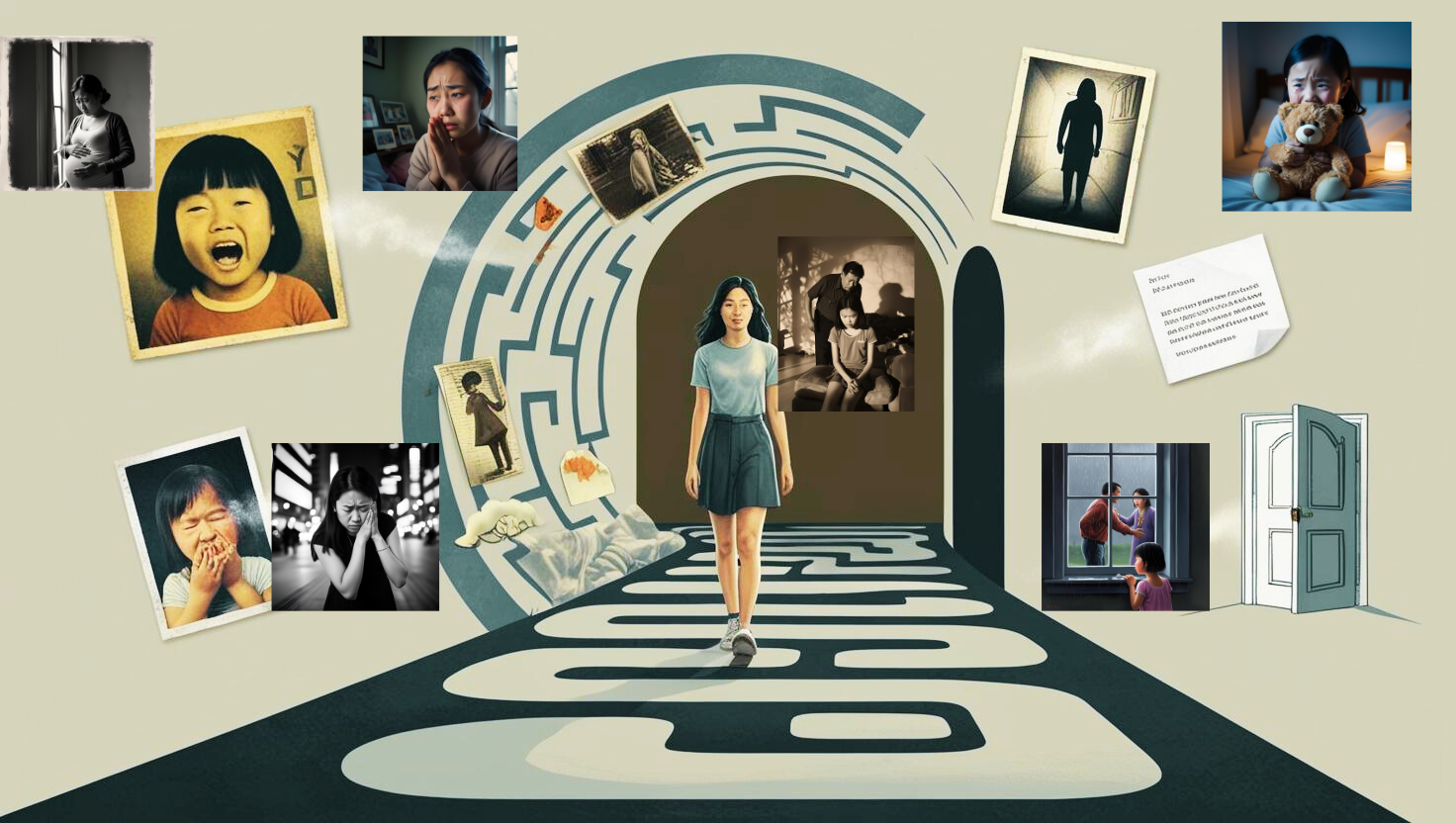
How Triggers Can Affect Your Life
Emotional triggers don't just affect how you feel. They can affect the choices you make, the opportunities you avoid, your relationships and the way you respond when life becomes difficult.
When you are triggered, fear makes your decisions for you. You may avoid speaking up, freeze during conflict, struggle to make decisions or keep choosing what feels familiar simply because it feels safer than the unknown; even when what is familiar is no longer working for you.
Over time, this can affect every part of your life. Relationships become caught in the same patterns where you feel unheard. Opportunities are missed because you cannot say what you need to say or do what you want to do because fear stops you from breaking out of your comfort zone. You can find yourself increasingly frustrated, not only with the people around you but with yourself and the life you are trying so hard to create. The frustration comes from things “not going your way” or “working out for everyone else”.
Over time, this can create the feeling that you are stuck in the same patterns, despite trying hard to move your life in a different direction.


How Somatic Coaching Can Help
One of the biggest misconceptions about triggers is believing that once you have identified where they came from, the work is done.
You may know exactly what happened to you and you may understand how something that happened in your childhood is connected to the way you react today. But understanding the event does not automatically process the feelings underneath it. Somatic coaching can help you work with the emotional response underneath a trigger, rather than only trying to understand or control the reaction.
The pain, sadness, grief and other emotions connected to what happened can still be sitting there, and those feelings are what continue to feed the trigger.
Understanding is a cognitive process. But triggers can happen so quickly that you don't have time to think your way through them. You can't simply rationalize yourself out of a reaction that is already happening. If you could, you would have done that ages ago. You would have reminded yourself to calm down the first time you had a disproportionate reaction. But the next time something similar happens, you can find yourself right back where you started.
This is where somatic coaching can help. We work with the feelings on a body level, because the reaction is not simply happening in your thoughts. The reaction is so fast that we slow it down and give you time to look at it, like a movie and then decide if you want to respond from it.
My approach is a 3 step process:
1. Identifying the emotion (through a memory or a feeling)
2. Processing it on a somatic level using a variety of tools such as visualizations
3. allowing it to be released.
We work with the memories and experiences connected to the trigger, bringing up the feelings underneath them so they can be processed rather than simply understood.
What Happens When You Work With a Trigger and What Can Change?
We begin by slowing down and connecting to your body, paying attention to what you are feeling and where those feelings are sitting. From there, we work with the memories and feelings connected to the trigger and use different techniques to help process what is underneath.
For some people, there may be particular areas of the body where they regularly feel their emotions. These may be areas that have carried a lot for you emotionally, which is why you may notice tension or discomfort showing up there more often.
Then we connect to the trigger on a body level. This can involve talking, breathing, visualisation, imagery and other techniques that help you sit with and process the feelings rather than simply analysing them. The work is not just about identifying what happened. It is about allowing yourself to engage with the emotion and process it on a deeper level.
I measure the intensity of the reaction throughout the process. Something that begins as an intensity of 10 out of 10 may reduce to a 3 or 4. If its’ now a 3 the space between 10 and 3 is time that you can pause and choose how you want to respond.
That doesn't mean you will never encounter that trigger again. But when it does happen, you may notice that your reaction is no longer as instantaneous or as intense. That change immediately creates more space.
Instead of a knee-jerk reaction, you may be able to pause and ask yourself, Okay, wait. Do I want to respond this way? You can begin engaging with yourself before immediately engaging with the situation.
Over time, the intensity and frequency of your triggers can reduce. Your ability to tolerate discomfort can grow. You may find more patience and compassion for yourself, and the things that once felt overwhelmingly painful can become easier to withstand.
There is also a domino effect. When you begin to feel differently about yourself and become less caught up in intense emotional reactions, that change doesn't stay in one area of your life. It can affect your relationships, your choices and the way you engage with the world around you.

Is This Work for You?
You may be exhausted by the same patterns repeating. There may be too much conflict, too much emotional intensity or a growing frustration that no matter how hard you try, things do not seem to move in the direction you want them to.
You may find yourself reacting in ways you do not like, then spending time judging yourself for those reactions afterwards. You also may find yourself criticizing yourself for how you are handling life and that negative self-talk will take a toll on you. You may struggle to speak up, freeze when things become difficult, and will make choices based on fear or repeatedly find yourself in situations that leave you unhappy.
This work is about understanding what is driving those reactions and changing the intensity of them, so that your responses no longer have to be instantaneous. As that intensity reduces, you have more space to engage with yourself and make choices based on what is actually happening in your life, rather than automatically reacting from history.
What If...
I've Tried Everything
You may feel as though you have already tried everything. You've read the books, done the work, tried different approaches and still find yourself having the same reactions.
But nothing you have done has been wasted. Every book you've read, every approach you've tried and every layer you've worked through has brought you to this point. All of it has contributed to your understanding and your readiness for what comes next.
I Should Be Able to Control This Myself
The belief that you should be able to control your reactions is, in itself, worth paying attention to.
Triggers are not something you can simply control through willpower. If you could think your way out of them or tell yourself to calm down, you would have done that already.
This work is not about gaining perfect control over yourself. It is about reducing the intensity of the reaction so that you have more space between the trigger and your response.
It's Not That Serious
It can be easy to minimize what is happening. You may tell yourself that it isn't serious enough, that other people have it worse or that you should simply get on with things.
Those are all ways of minimizing your pain so you don’t have to face it. It’s scary. I know. But if you have come this far you are more ready than you think. Come and talk and we can work through this as well, so you are more comfortable.
This Is Going to Be Hard and Painful
Yes, parts of this work can be uncomfortable. Sitting with feelings you have spent a long time avoiding can hurt.
But you are already uncomfortable. The reactions, conflict, frustration and patterns you are living with are causing their own pain. The question is whether you are willing to experience a different kind of discomfort, (which is temporary to do this work) in order to create something new.
Change is not always comfortable. Sometimes it means stepping into the very feelings you have spent your life trying to move away from.
What If I Don't Know Where to Start?
You do not need to know exactly where to begin. You do not need to have every trigger identified or understand every experience that has contributed to where you are now.
You only need to be willing to start paying attention. I will help you find the map.

As you begin working with your reactions, the connection to yourself will become stronger. As the intensity of the triggers reduces, there can be less self-doubt and self-criticism, and more trust in your ability to sit with what you feel.
There Is Another Way Forward
You may not be able to change what happened, but you can change the way it continues to affect your life.